Fried rice in Austin lives in strip centers along the north corridors, in the suburbs, and in a handful of downtown rooms that have built real followings on consistent, fast execution. These seven spots earned their place on the list through the review record, not marketing. No restaurant pays to be listed, and every Insider Score reflects what diners actually report.
Compare all 8 restaurantsNeighborhood · price · score · first order
In the same order as the guide. Scores are out of 10; dollar symbols show the listed price tier.
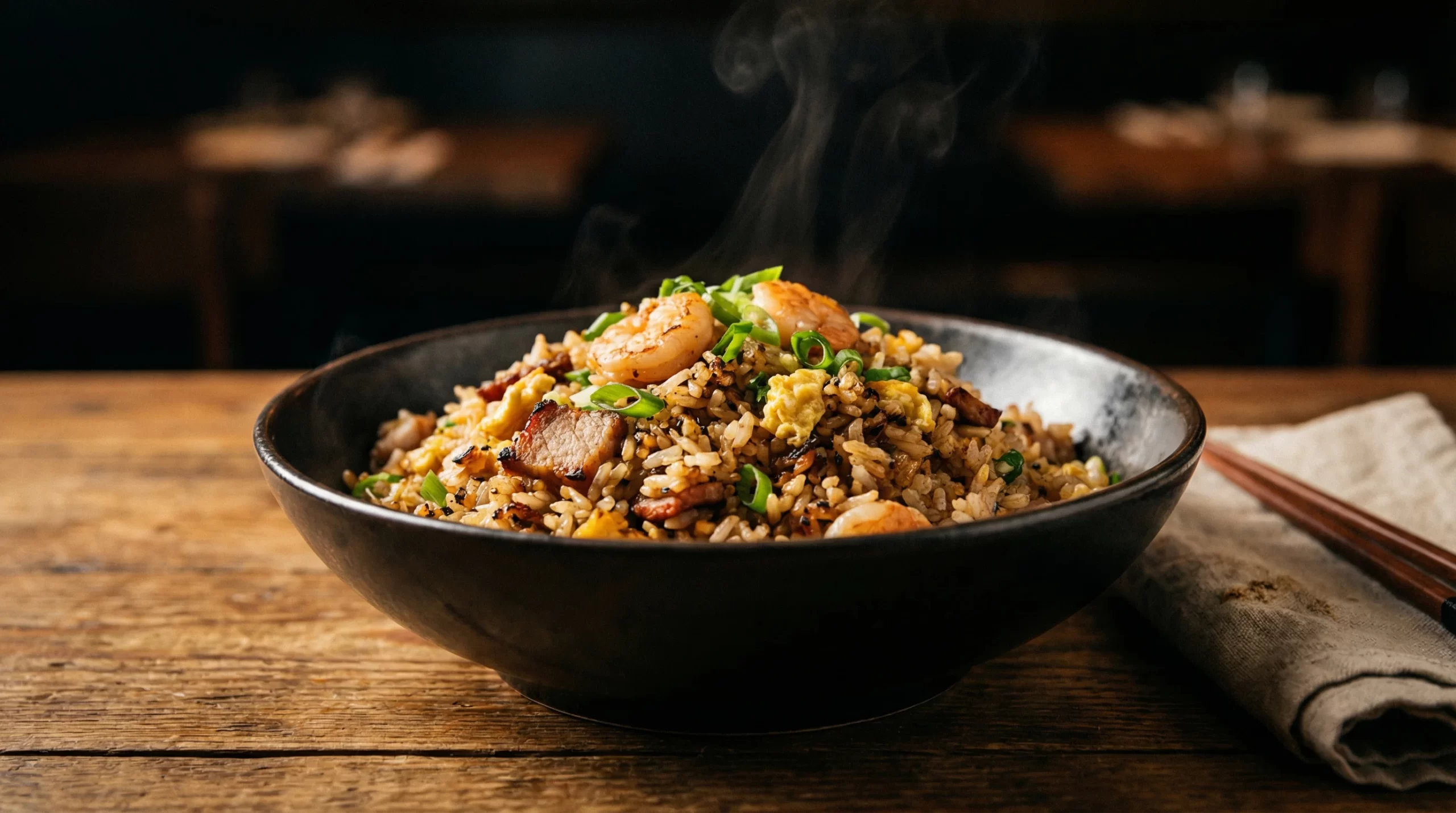
Din Ho's pork fried rice shows up at nearly every family-style table, usually alongside the Beijing Duck and eggplant in garlic sauce. The room seats large parties without friction, service moves fast, and the kitchen keeps a consistent tempo across lunch and dinner. On North Lamar, it has held a long-standing reputation as the reliable Chinese BBQ anchor for group meals in the north corridor. Order the duck and the fried rice together.
What to order
Beijing Duck, Beef Crispy Noodle, Pork Fried Rice
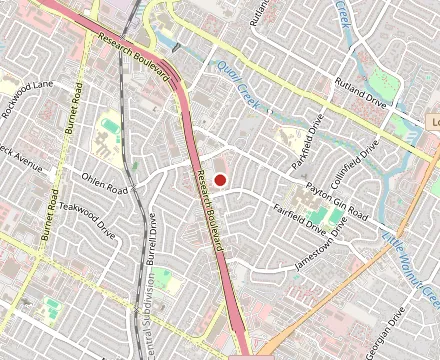
8557 Research Blvd #116, Austin, TX 78758 · (512) 832-8788
Soup dumplings and pan-fried dumplings are the draw, but the fried rice earns its place as a supporting order that rounds out the meal. The kitchen turns orders quickly, prices stay low, and the staff has a reputation for genuine friendliness. The room runs a focused, efficient counter-service model that keeps the line moving. A reliable north-corridor stop for an affordable, fast meal that does not cut corners on execution.
The chicken fried rice comes out hot and fast, which is the point. China Cafe Lakeline runs a tight lunch-special operation: fried rice, hot and sour soup, an egg roll, and General Tso's Chicken cover most of the regulars' orders. Service is quick and the room is straightforward, Americanized Chinese without apology. The Lakeline location has built a steady weekday following among workers who want a reliable, filling lunch with no wait.
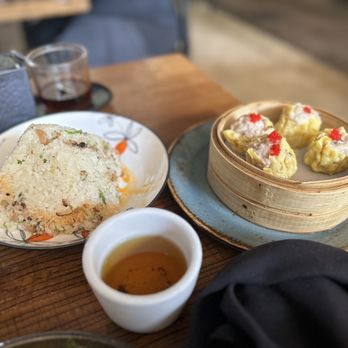
WU Chow is the upscale room in this group, a downtown dim sum destination where har gow, siu mai, and char siu bao anchor the cart. The fried rice plays a secondary role here, supporting larger group meals rather than leading them. The room has a reputation for a lively atmosphere and a well-curated playlist. Service consistency has drawn mixed reports for large reservations. Come for the dim sum spread with a group; the fried rice rounds out the table.
WU Chow sits in downtown Austin as the city's most visible case for Chinese dining that goes beyond the North Lamar corridor. The room runs upscale by Austin standards, but the price stays moderate, which puts har gow, siu mai, and char siu bao within reach of anyone who wants dim sum done with some rigor and without a drive to a suburban strip center. The har gow are the anchor. Properly made har gow are a kitchen's honesty test: thin, translucent wrappers, plump shrimp filling, nothing to hide behind. The version here holds up across the record.
Siu mai, the open-topped pork and shrimp dumplings, land with the same consistency. Char siu bao, the barbecued pork buns, rounds out the trio in the form most rooms offer: soft, slightly sweet, the filling the variable that separates a careful kitchen from a careless one. The room runs full service and is built for groups. A table of eight or ten on a weekend evening is the natural unit here, and the format rewards that, with dishes arriving in rounds. The energy level is real: the music tends toward an unexpected but not abrasive playlist, and the dining room reflects an urban crowd that came dressed for it.
That liveliness is part of the proposition. Service is the variable. Large party reservations have run into execution gaps, particularly around timing and check management, and those issues show up often enough in the record to be worth noting. The kitchen side of the equation reads as reliable. The front-of-house side depends on the night and the table size.
For Austin, this is dim sum at a tier the city does not have many options to match. The address is downtown, not a strip center, and the room prices accordingly without crossing into expense-account territory.
Insider tip
Har gow and siu mai are the core order. For large groups, confirm split-check arrangements with a manager at arrival rather than with the server alone.
What to order
Har gow, Siu mai, Char siu bao
HoursMon - Thu:11:00 AM - 2:00 PM, 4:00 PM - 10:00 PMFri:11:00 AM - 2:00 PM, 4:00 PM - 11:00 PMSat:5:00 PM - 11:00 PMSun:11:00 AM - 3:00 PM
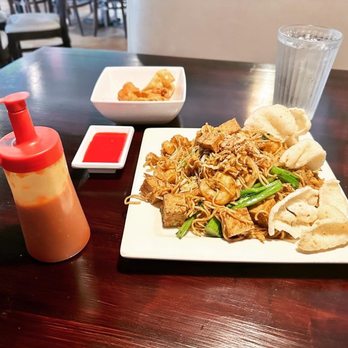
Twin Panda fills an Indonesian gap in Austin with nasi goreng and mie goreng, fried rice and noodle dishes rooted in a different tradition than the Chinese-American rooms on this list. The rendang draws regulars. The room is small, the staff is welcoming, and the flavors read as careful and distinct. For anyone who has been looking for Indonesian cooking in Austin, this north-corridor spot is the answer the neighborhood needed.
Twin Panda sits at an interesting intersection: the name reads Chinese, the kitchen runs Indonesian, and Austin has few rooms covering either with this kind of specificity. The cuisine here is the real subject. Indonesian cooking is underrepresented along the north corridor and across the wider metro, and Twin Panda fills that gap with the dishes that define the tradition. Nasi goreng is the anchor.
The Indonesian fried rice carries the layered, savory depth the dish requires, built on high heat and seasoning that lands with character rather than neutrality. Mie goreng, the fried noodle counterpart, runs on similar logic and holds up across the menu as a second reliable entry point. Rendang is the room's most demanding dish and its most telling one: the slow-braised beef calls for patience in the kitchen, and the version here reads as the real thing, dry and concentrated rather than sauced and rushed. That three-dish core gives the place a clear identity.
The room is small. Service is attentive and the front-of-house runs warm without being performative about it. Weekday evenings draw a steady crowd, suggesting the place has built genuine local traction rather than coasting on novelty. The price sits in moderate range, which keeps it accessible as an everyday option rather than a destination-only proposition.
For the North Lamar corridor and the surrounding neighborhoods, where Vietnamese, Korean, and Chinese dominate the strip-center landscape, a credible Indonesian kitchen is genuinely notable. The food answers a specific craving that most Austin zip codes can't resolve. That specificity is what the room trades on, and the execution backs it up.
Insider tip
Lead with the rendang if the table can handle the wait. The nasi goreng and mie goreng are the faster, safer anchors for a first visit, but the rendang is what distinguishes the kitchen.
Asia Cafe runs a family-style model that rewards return visits. The mapo tofu with ground pork is the anchor, soft tofu and a well-seasoned sauce that regulars order every time. Coworker groups work through the menu systematically, adding one new dish per visit alongside established favorites. The shared-plate format makes it the right room for groups willing to order broadly. Fried rice sits in the rotation as a reliable table staple alongside the bolder dishes.
Me Con Bistro is a Vietnamese room where the pho and bo luc lac lead the menu, and the kitchen keeps prices low enough for a regular weeknight habit. The spring rolls are fresh and consistently made. Fried rice appears as a supporting order in a menu built around noodle soups and sauteed beef. The room is fast, affordable, and does not overpromise. For a budget-conscious weeknight dinner on the north side, it earns its place on the regular rotation.
This bistro on West William Cannon Drive serves a Vietnamese and Chinese menu in a clean room where customers seat themselves and a fish tank keeps kids entertained. Neighbors say it fills a gap for Vietnamese food nearby, and Chinese dishes share the list.
Pho is the most mentioned dish, with rich, aromatic broth and noodles cooked right. For Chinese cravings, diners praise pork bao, mapo tofu, and green beans, and orange chicken, sesame chicken, kung pao chicken, and fried rice appear too. Kimchi fries are generous enough for a meal, and vermicelli bowls, pad Thai, and wings expand the menu.
Practical notes: portions run small for some diners, with one toddler needing two child bowls of pho. A cheese topping on one order surprised a table because the menu did not mention it, and some staff were new to the menu, so asking questions helps.
What to order
Pho, Bo luc lac, Spring rolls
HoursMon - Sun:Closed
Address3421 W William Cannon Dr #101 Austin, TX 78745
House of Three Gorges is a small room where the jumping fish and green beans have built a genuine following, and the rice dishes anchor a menu with real regional character. Regulars describe the flavors as distinct from the standard north-corridor Chinese lineup. The restaurant is compact, the room is casual, and the kitchen sends out food with enough personality that first-time visitors return. The rice dishes are the supporting cast; order the jumping fish as the centerpiece.
House of Three Gorges sits on Research Boulevard among a row of Asian restaurants and looks plain from outside. Diners say the room is a no-frills place with big portions at a good price and dishes not found elsewhere in Austin. A QR code at the door puts a party on a virtual queue, with parties of five or more going to the desk.
Sichuan dry fried chicken is the most mentioned plate, with cumin lamb a close second, loaded with cumin seeds, peppercorns, cilantro, and chilies. Dry pot pork ribs, mala chicken, wontons in spicy soup, and hot and sour soup show up often. A vegetarian diner called the mapo tofu the best they have found in the country, and another named the orange chicken the best in Austin.
Practical notes: waits are common, with little room to wait inside. The heat is real, and a few diners found dishes too salty on a weeknight. Vegetarian options are plentiful.
The menu centerpiece at this north corridor Chinese room, built around whole fish and the kind of heat that defines the Three Gorges regional tradition.
Green beans
Dry-fried green beans done the Sichuan way, with enough char and seasoning to hold their own as a reason to visit.
Rice dishes
Rice is the base move here, not an afterthought, and the kitchen treats it accordingly alongside the heavier flavored proteins.
Fried rice questions, answered.
How does Top of Austin pick the best fried rice spots near me?
Every restaurant on this list is ranked using the Insider Score, which analyzes the public review record for dish-level consistency, service reliability, and value. No restaurant pays to be listed. The picks reflect what diners actually report, not advertising relationships.
Where is the best fried rice in Austin for a large group?
Din Ho Chinese BBQ on North Lamar is the most consistent large-group option on this list. The room seats parties comfortably, service is fast, and the pork fried rice pairs well with the Beijing Duck and shared plates. WU Chow downtown handles group dim sum meals with a more upscale room and a broader cart.
Are any of these fried rice spots in the north Austin suburbs like Round Rock or Cedar Park?
Most entries on this list are in Austin proper along the North Lamar and north corridor strip centers. China Cafe Lakeline is the closest to the Cedar Park and northwest suburban edge. The north suburbs have growing Chinese and Asian dining scenes, and the Insider Score covers those rooms as the record builds.
What is the Insider Score and can restaurants buy their way onto this list?
The Insider Score is Top of Austin's data-driven ranking built from the public review record. It weighs dish-level consistency, service reliability, and value across a large sample of real diner reports. No restaurant pays for placement or a higher score. Every pick on this guide earned its spot through what diners actually say.
The data first, then the verdict
We start with the review record, not a press release. Every room here is a real kitchen with a strong rating across a meaningful number of reviews, ranked on our 10-point Insider Score. We weight consistency over time and the rooms locals return to, not the ones tourists pass through once. The list updates as the data does. How we work →
Kevin Doan covers the North Austin food corridors and the suburbs for Top of Austin, Vietnamese, Korean, Chinese, Thai, Japanese, and Indian rooms along North Lamar and out to Round Rock and Cedar Park.
A new place to try.
The Tip Sheet brings restaurant recommendations to your inbox.